

Repairing Engines. Reclaiming Life. Michigan Man Credits Stroke Rehabilitation
October 8, 2026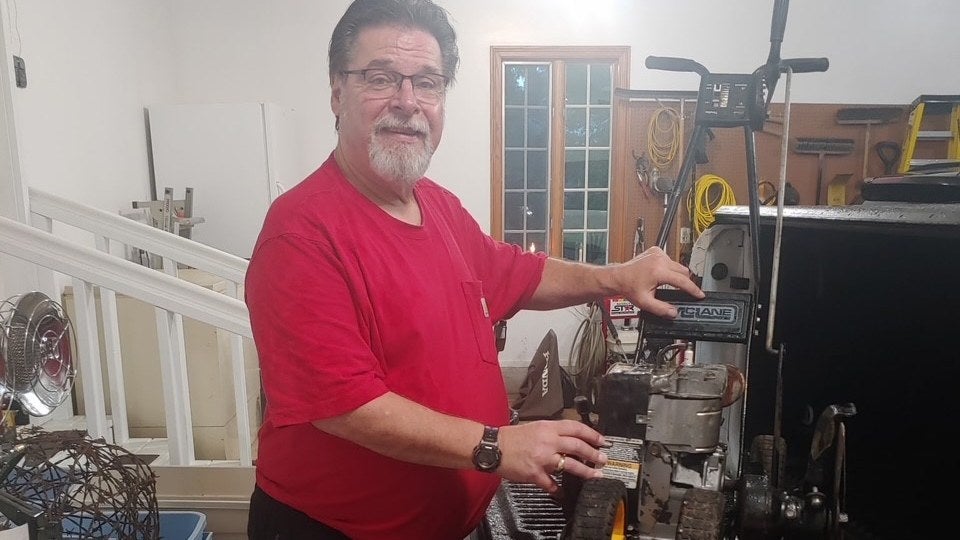
By: Beverly Moody
Categories: Neurosciences (Brain Spine, Nerves), Stroke
Michael Tindall, 68 years old, is a retired power train engineer. He enjoys repairing and selling small engines. One day while tooling around in his shop at home, he started feeling dizzy and unstable. When the symptoms wouldn’t go away, his wife rushed him to the Emergency Department.
“They were constantly evaluating me,” said Michael. “I was admitted to Trinity Health Ann Arbor, because my symptoms had progressed so much; I couldn’t move my right leg or arm.”
Fortunately, the medical team was able to intervene quickly and stabilize his condition, but a stroke had significantly affected his mobility and ability to perform everyday tasks.
While the immediate medical crisis had passed, Michael’s recovery was just beginning. He was transferred to inpatient rehabilitation to begin the hard work of rebuilding his strength and independence.
His world had been turned upside down. Just days earlier, he had been an active, independent retiree. Now, he relied on a walker and faced an uphill battle to relearn everyday activities. With the support of his wife and an experienced rehabilitation team, Michael committed himself fully to intensive therapy.
Participating in his care
Inpatient rehabilitation was a game changer – the wrench Michael needed to fix his engine. Michael valued that he was asked to fully participate in his care and he was kept well-informed.
“That was one of the things that impressed me most,” said Michael. “Every nurse and doctor asked me for my input. I believed they were the experts, but I participated in the decision-making.”
During inpatient rehabilitation, Michael received approximately three hours of therapy a day. He started each morning with Samantha, his occupational therapist.
“As part of the learning process, my wife helped me shower and get dressed, though Samantha wasn’t far, coaching us along the way,” said Michael. “After that, we’d head to the therapy room together. I worked on exercises to improve movement in my arm and wrist, and Samantha used electrical stimulation to help activate and strengthen my muscles.”
Electrical stimulation is often used in stroke rehabilitation to help re-engage weakened muscles, improve muscle activation and support recovery of movement.
In addition to therapy and medical management, Michael enjoyed how inpatient rehabilitation builds camaraderie among patients. Michael found encouragement in watching others overcome their own challenges and appreciated the friendships and conversations that developed between therapy sessions.
“Sitting with other patients was great therapy in itself,” said Michael. “One woman was quite depressed, and I would have conversations with her. I’d tell her, ‘Don't focus on the things you can’t do. Focus on the things you can do today that you couldn’t do yesterday. If you do that, your list of things you can’t do will become smaller and smaller.’”
For Michael, his list grew smaller every day. After a little more than two weeks in inpatient rehabilitation, he had made such significant progress that he no longer required around-the-clock care.
Outpatient therapy
Once discharged home, Michael began outpatient physical and occupational therapy through Trinity Health Ann Arbor, building on the progress he had made in the hospital. There, he continued working toward greater strength and independence, celebrating each milestone with his physical therapist, Emily.
“The first time I climbed a flight of stairs in therapy, Emily was so excited,” said Michael. “She did a little dance and ran to get my wife so she could see it.
“Looking back, I didn’t know what to expect. All my life, I’d been able to climb stairs without using a railing, so reaching that point meant a lot to me. I’m so thankful I chose Trinity Health for my therapy. I can’t imagine what my recovery would have been had it not been for the support of my entire team.”
After therapy
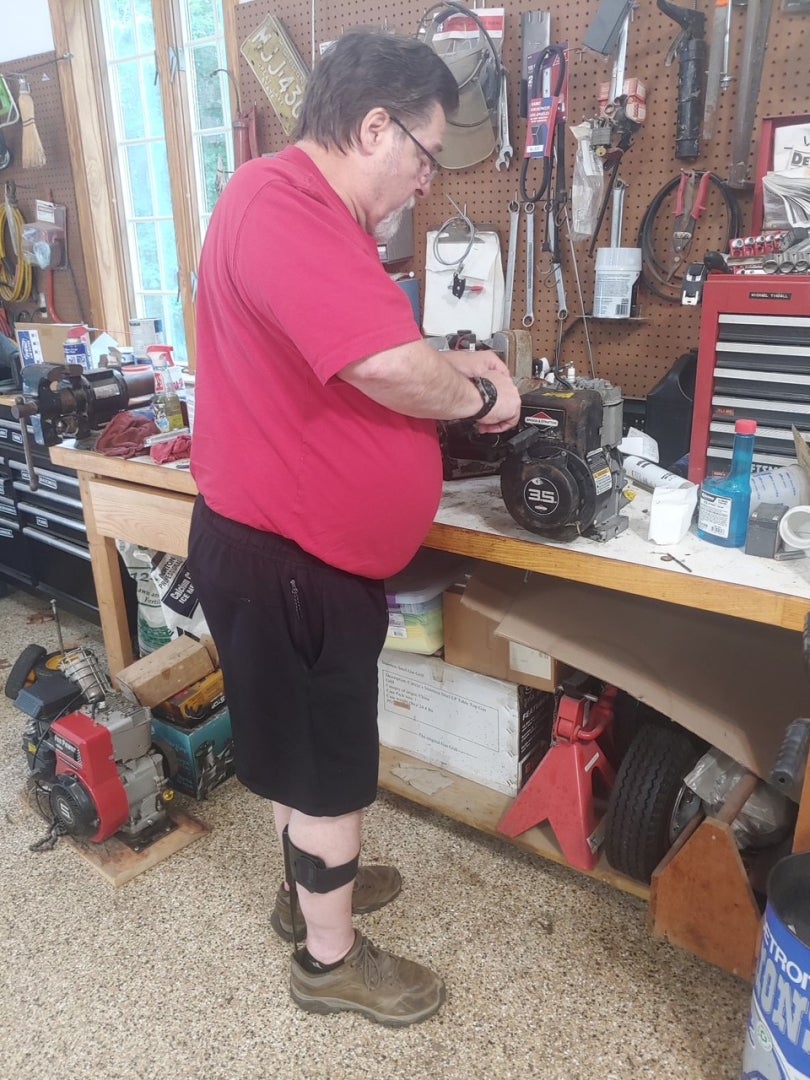
“I remember when I could just barely wiggle my fingers,” said Michael. “Now I grab and squeeze things. I still get fatigued, but I can do it. I wear a driving brace and a walking brace but I move on my own and have regained much of my independence.
“Today I drove my wife to her doctor’s appointment! I shower and dress myself, I take care of all my functions myself. It might take me longer, but I do it myself.”
Michael is also back to tinkering in his garage, building and repairing engines. “I can’t stress enough how much my medical team’s encouragement meant to me,” said Michael. “When I was vulnerable, their compassion was what I needed. I never would have dreamt that care could be this good.”
Interested in learning more?
Trinity Health Michigan’s Inpatient Rehabilitation Program provides intensive, multidisciplinary care for patients recovering from stroke, injury, surgery, and other complex medical conditions. Through individualized therapy and specialized medical support, the program helps patients regain function, independence, and quality of life.
Learn More About Trinity Health Michigan's Inpatient Rehabilitation Program