



Cardiac PET Stress Test
Advanced Heart Imaging for Clearer Answers About Your Heart Health
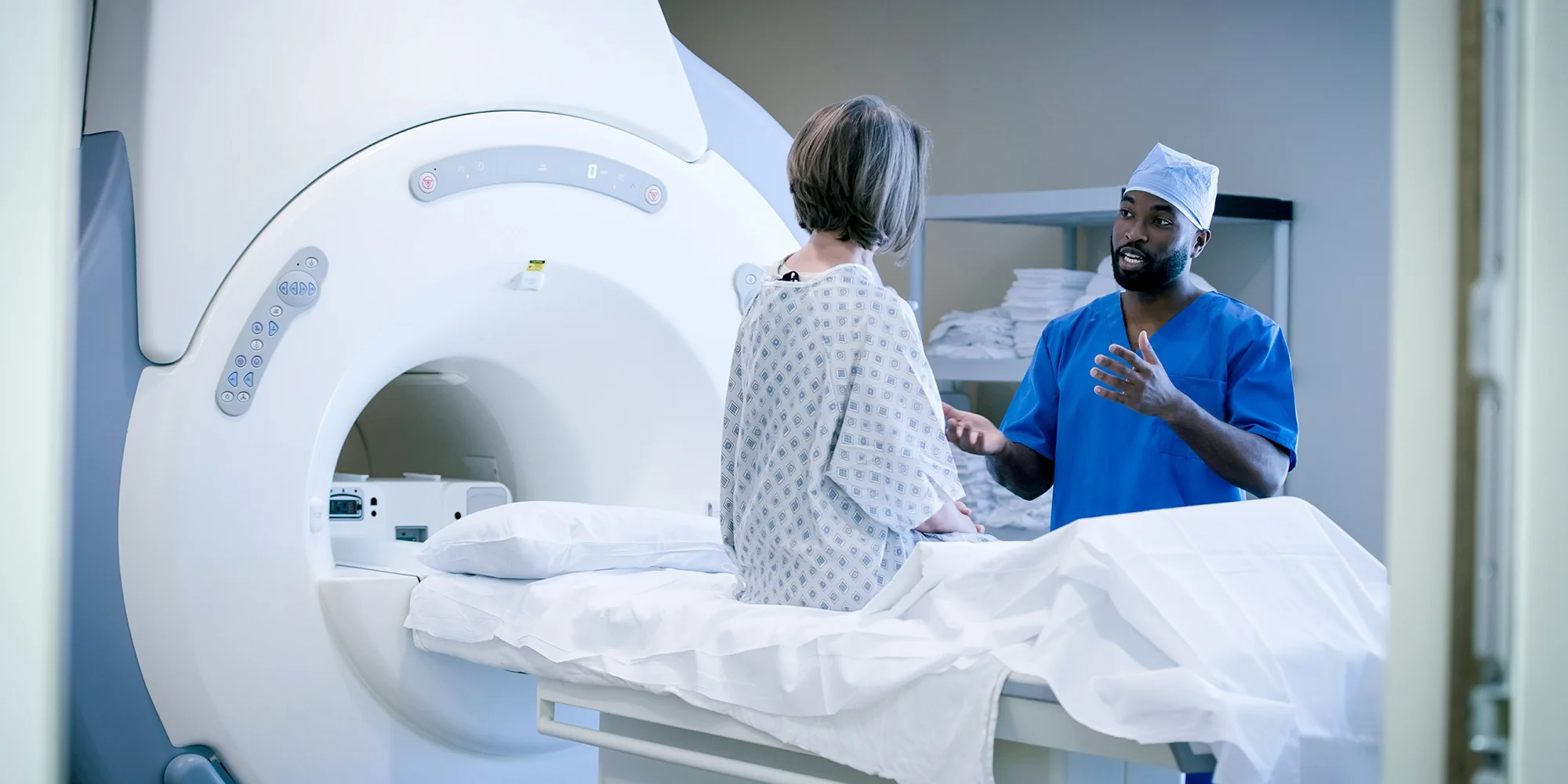
Understanding how well blood flows to your heart is an important step in diagnosing and managing heart disease. At Trinity Health Michigan, cardiac PET stress testing provides detailed images of your heart to help identify potential problems with blood flow and guide personalized treatment decisions.
What is a Cardiac PET Stress Test?
A cardiac PET (positron emission tomography) stress test is a noninvasive imaging test that measures blood flow to your heart muscle, both at rest and during stress. It uses advanced imaging technology and a small amount of radioactive tracer to create detailed pictures of how well blood is reaching different areas of your heart.
Unlike a traditional exercise stress test, a cardiac PET stress test typically uses medication to increase blood flow to your heart, eliminating the need to walk or run on a treadmill.
By comparing images taken at rest and during stress, your care team can identify areas with reduced blood flow, evaluate for signs of coronary artery disease and determine whether additional care may be needed.

Take the Next Step
A primary care provider can evaluate your health concerns, recommend appropriate testing and help you navigate the next steps based on your results.
Find a DoctorWhy Might You Need a Cardiac PET Stress Test?
Your provider may recommend a cardiac PET stress test if you are experiencing symptoms of heart disease or need a more detailed evaluation of your heart’s blood flow.
A cardiac PET stress test may help:
- Evaluate chest pain or shortness of breath: Determine whether symptoms may be related to reduced blood flow to the heart.
- Detect signs of coronary artery disease: Identify areas of the heart that may not be receiving enough blood due to narrowed or blocked arteries.
- Assess heart function: Evaluate how well your heart pumps blood and responds to stress.
- Investigate ongoing heart symptoms: Provide additional information when previous cardiac testing has been inconclusive.
- Guide treatment decisions: Help your provider determine whether medications, additional testing or other treatments may be appropriate.
Your cardiologist will consider your symptoms, medical history and risk factors to determine whether a cardiac PET stress test is right for you.
Benefits of Cardiac PET Stress Testing
Cardiac PET imaging offers an advanced approach to evaluating heart health, providing detailed information that can help your care team make informed decisions.
Benefits may include:
- Detailed heart imaging: High-quality images help identify areas of reduced blood flow to the heart muscle.
- Advanced blood flow assessment: Cardiac PET helps your care team see how well blood is reaching different areas of your heart, both at rest and during stress. This information can help guide diagnosis and treatment decisions. In addition, cardiac PET typically uses less radiation than traditional SPECT imaging while delivering detailed images of the heart.
- Noninvasive testing: The test does not require surgery or the insertion of a catheter into an artery.
- No treadmill required for most patients: Medication is typically used to increase blood flow during the stress portion of the test.
- Personalized care planning: Results help your cardiologist determine appropriate next steps based on your individual heart health needs.
Frequently Asked Questions About Cardiac PET Stress Tests
A traditional exercise stress test typically monitors your heart’s electrical activity while you walk or run on a treadmill. A cardiac PET stress test uses advanced imaging technology to evaluate blood flow to your heart muscle. Most cardiac PET stress tests use medication rather than exercise, allowing providers to assess blood flow even when a patient cannot exercise.
A cardiac PET stress test is a type of nuclear stress test. Both PET and traditional SPECT nuclear stress tests use a small amount of radioactive tracer to evaluate blood flow to the heart. PET uses different imaging technology and can provide detailed images and additional blood flow measurements that may help evaluate heart disease.
The total appointment time varies depending on the imaging protocol and your individual needs. Many appointments take approximately one to three hours, although the actual scanning time is shorter. Your care team will provide specific timing instructions before your visit.
Cardiac PET stress testing is generally safe for most patients. The test uses a small amount of radioactive tracer and is performed while your heart rate, blood pressure and symptoms are monitored. As with any medical test, there are potential risks, including temporary side effects from the stress medication.
Your provider will review your health history to determine whether the test is appropriate for you.
A cardiac PET stress test can identify areas of reduced blood flow that may suggest narrowed or blocked coronary arteries. Although it does not directly show the inside of the arteries, the results can help your cardiologist determine whether additional testing or treatment is needed.
Cardiac PET Stress Test Locations

Trinity Health Imaging - Grand Rapids Hospital
200 Jefferson Ave SE 1st floor
Grand Rapids, MI 49503