


Top Causes of Balance Problems in Adults 65+ and How to Prevent Falls
March 26, 2026
As adults age, changes in strength and mobility can quietly affect balance long before a fall ever happens. We may lose strength, flexibility in our joints, quickness and senses. These changes can weaken balance and increase the risk of falling, even before a person has their first fall.
Falls are the top cause of injuries for adults 65 and older, according to the CDC. (CDC, 2026)
Karl Buche, a physical therapist and clinic director at Trinity Health Probility Physical Therapy - Pinckney, explains why balance gets worse over time and what you can do to stay steady and sure of yourself.
Karl is experienced in orthopedic and neurological rehabilitation. He shares early signs to look out for and daily habits and therapy that can help reduce the risk of falling.
What are the most common reasons adults 65+ experience balance issues?
Balance involves multiple systems. It includes our vision, proprioception (knowing where our body is) and the vestibular system. The vestibular system helps detect motion and is found in the inner ear.
When two or more of these systems decline at once, balance becomes harder. The most common causes include:
- Muscle weakness, especially in the muscles surrounding our hips and ankles
- Slower reaction time, meaning you are unable to catch yourself quickly when you stumble
- Joint stiffness or arthritis affecting your foot, ankle, hips and spine
- Chronic conditions such as diabetes, Parkinson’s, stroke history or cardiac issues
What early signs of balance issues should older adults or caregivers watch for?
Subtle changes often appear long before a fall. Look for these red flags:
- Reaching for furniture or walls often
- Trouble with uneven surfaces, curbs or dimly lit areas
- Feeling “off-balance” when turning or looking over the shoulder
- Difficulty getting up from a chair without using hands
- Hesitation or anxiety with walking in busy environments
- Increase in near falls
What types of exercises or therapy approaches are most effective for improving balance?
Our balance programs train multiple systems at the same time. We focus on:
- Strengthening
- Focus on leg strength and core stability
- Calf stretching, heel lifts, sit-to-stands and mini-squats while holding onto a counter or heavy chair
- Static and dynamic balance training
- Practicing with a narrow base of support or on a single leg, safely shifting weight, and stepping over or around obstacles.
- Gait training
- Varying speeds, using head turns, dual-tasking and practicing on uneven surfaces
- Vestibular or sensory integration training
- For those with dizziness, vertigo or sensory loss.
- Functional training
- Practicing real-life, functional activities in a safe, controlled environment. Use a stable support surface, such as a kitchen counter or heavy chair.
Practicing real-life, functional activities in a safe, controlled environment. Use a stable support surface, such as a kitchen counter or heavy chair.
Avoid pushing to the point of losing control. Your balance won’t improve if you fall!
Have a family member nearby if your balance is significantly impaired. Stop immediately if dizziness, severe unsteadiness, or sudden pain occur.
What can a new patient expect during their first balance or mobility assessment?
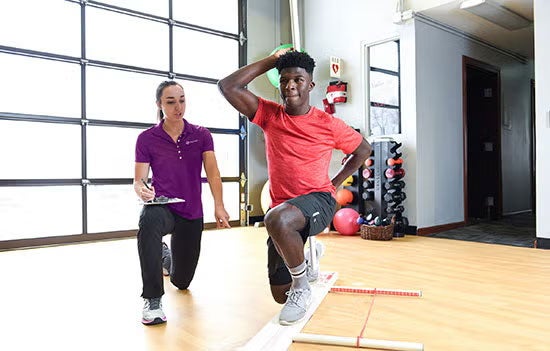
An assessment typically includes answering questions related to medical history, current medications, past falls or near-falls and any sensory issues, such as dizziness, visual problems, neuropathy and pain.
You will then be tested for strength, range of motion and other senses to understand where your balance is being challenged the most.
You will also take one or more tests for balance. The evaluation typically includes learning and practicing exercises you will be doing at home.
Dealing with Balance Issues?
Request a rehabilitation consultation by selecting your preferred location below.
A physician referral is required for physical therapy services.

Don’t Have a Primary Care Provider?
Find one at Trinity Health Michigan.
Find a Primary Care Provider