



Fiber 101: Why Fiber Matters for Gut Health and Colon Cancer Prevention
April 18, 2024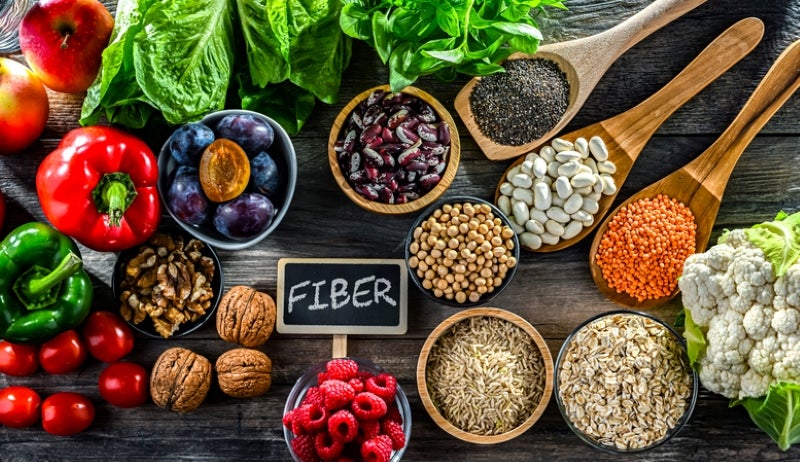
Categories: Digestive Health, Health & Wellness
Tags: Lifestyle Medicine
Updated on: April 2, 2026
What is fiber and Why it Matters Now?
Fiber is a type of carbohydrate that the body cannot digest. Unlike starches and sugars, fiber moves through the digestive tract with little change.
It then reaches the large intestine (colon), where it supports digestive and overall health.
Over the past decade, colorectal cancer rates have risen significantly in younger adults. This has led major medical groups to lower the recommended age for routine colorectal cancer screening.
For average-risk adults, the age changed from 50 to 45. From a lifestyle medicine view, this trend matches the rise of ultra-processed foods. It also matches the drop in fiber-rich, whole plant foods in today’s diet.
Dietary fiber is not just roughage that keeps us regular. It is the main fuel for the gut microbiome.
Fiber and the Gut Microbiome
In the colon, beneficial intestinal bacteria known as the gut microbiome use fiber as their main energy source. When these microbes ferment fiber, they produce short‑chain fatty acids (SCFAs) such as butyrate.
These compounds:
- Reduce inflammation
- Strengthen the gut lining
- Improve insulin response
- Support immune health
- Protect colon cells from cancer
In contrast, diets high in processed foods and animal products, but low in fiber, can starve these helpful microbes. This can reduce SCFA production. It can also create a more inflammatory, cancer-promoting environment in the colon.
Despite fiber’s importance, an estimated 97% of people do not meet recommended daily fiber intake.
Where Do We Get Fiber?
Fiber is found exclusively in plant foods, including fruits, vegetables, beans, lentils, whole grains, nuts and seeds. Variety matters, eating many different plant foods supports a stronger and more resilient gut microbiome.
| Food Amount & Total Fiber (Grams) | |||
| ½ cup cooked kidney beans = 7.9 grams | 1 Pear = 5.1 grams | 1 med baked sweet potato w/skin = 4.8 grams | 1 ounce almonds = 3.5 grams |
| ½ cup cooked lentils = 7.8 grams | ½ cup raspberries = 4 grams | 1 med baked potato w/skin = 4.4 grams | ½ cup soybeans = 5.1 grams |
| ½ cup cooked black beans = 7.6 grams | ½ cup blackberries = 3.8 grams | ½ cup cooked frozen spinach = 3.5 grams | ½ cup quinoa = 5 grams |
| ½ cup canned chickpeas = 5.3 grams | 1 med Apple = 3.3 grams | ½ cup cooked frozen mixed veg = 4 grams | ⅓ cup bran cereal = 8.6 grams |
| ½ cup baked beans = 5.2 grams | 5 dried dates = 3.3 grams | ½ cup cooked frozen green peas = 4.4 grams | 1 vegetable or soy patty = 3.4 grams |
| ½ cup bulgur = 4.1 grams | |||
Why Is Our Diet So Low in Fiber?
The Standard American Diet is dominated by refined and ultra‑processed foods. About 63% of calories come from processed foods, 25% from animal‑based foods and fewer than 10% from fiber‑rich whole plant foods.
Fiber and Disease Prevention
Fiber supports regular bowel movements, lowers cholesterol, improves blood sugar control and promotes healthy weight management. More importantly, fiber reduces chronic inflammation and is associated with a lower risk of several cancers, including colorectal cancer.
Everyday lifestyle choices can reduce disease risk. Focus on fiber-rich plant foods and regular physical activity. Get restorative sleep and manage stress well. Avoid tobacco and limit alcohol.
How Much Fiber Do We Need?
The Institute of Medicine recommends 25 grams per day for women and 38 grams per day for men under age 50. For adults over 50, recommendations are 21 grams for women and 30 grams for men. Most adults consume only about 15 grams per day.
What Does a Fiber‑Fueled Day Look Like?
Meeting fiber needs means centering meals on beans and lentils, intact whole grains, vegetables, fruits, nuts and seeds. Aim for a wide variety, people who eat 30 or more different plant foods per week have a more diverse gut microbiome and higher levels of beneficial SCFAs.
Tips for Increasing Fiber
Increase fiber gradually and stay well hydrated, aiming for 8–10 cups of fluids per day. Tracking plant variety, including herbs and spices, can help build a sustainable fiber‑rich pattern.
Final Thoughts
Prioritizing fiber‑rich plant foods is one of the most powerful and accessible steps to support gut health and reduce colorectal cancer risk.
Fortunately, there are countless ways to incorporate plant-based foods into our meals and snacks, offering endless culinary possibilities. If you want inspiration, check out the free virtual monthly Cooking with Plants class under virtual offerings.
The book Fiber Fueled (listed in references) is a total gut health program. Author and gastroenterologist Dr. Bulsiewicz writes as if he is having an easy-to-understand, personal conversation with you. It is an invaluable resource.
Interested in Using Food as Medicine?
Learn how lifestyle medicine uses nutrition and daily habits like fiber‑rich, plant‑forward eating to support gut health and long‑term wellness.

Concerned About Colorectal Cancer?
If you have symptoms, a family history, or questions about screening and prevention, talk with your primary care provider or find one to get started.
Find a Primary Care ProviderReferences:
- Bulsiewicz, MD, MSCI, W. (2020). Fiber Fueled. Avery/Penguin Random House LLC.
- (2016). 'The Standard American Diet is Even Sadder Than We Thought'. Forks Over Knives. (May 23).
- Tan J, McKenzie C, Potamitis M, Thorburn AN, Mackay CR, Macia L. The role of short-chain fatty acids in health and disease. Adv Immunol. 2014;121:91-119. doi:10.1016/B978-0-12-800100-4.00003-9
- Institute of Medicine (US) Panel on the Definition of Dietary Fiber and the Standing Committee on the
Scientific Evaluation of Dietary Reference Intakes. IV. Proposed definition of dietary fiber. In: Dietary
Reference Intakes Proposed Definition of Dietary Fiber. Washington, DC: National Academies Press (US); 2001. https://www.ncbi.nlm.nih.gov/books/NBK223591/. - Institute of Medicine. Dietary Reference Intakes for Energy, Carbohydrate, Fiber, Fat, Fatty Acids, Cholesterol, Protein, and Amino Acids. Washington, DC: The National Academies Press; 2005. https://doi.org/10.17226/10490.
- McDonald D, Hyde E, Debelius JW, et al. American Gut: an Open Platform for Citizen Science Microbiome
- Research. mSystems. 2018;3(3):e00031-18. Published 2018 May 15. doi:10.1128/mSystems.00031-18
- Lloyd-Price, J., Abu-Ali, G. & Huttenhower, C. The healthy human microbiome. Genome Med 8, 51 (2016). https://doi.org/10.1186/s13073-016-0307-y
Medical contribution informed by Robert Breakey, MD.