
Recognizing the signs of stroke, calling 911 immediately, and receiving timely clot-busting medication helped one Michigan man make a remarkable recovery.
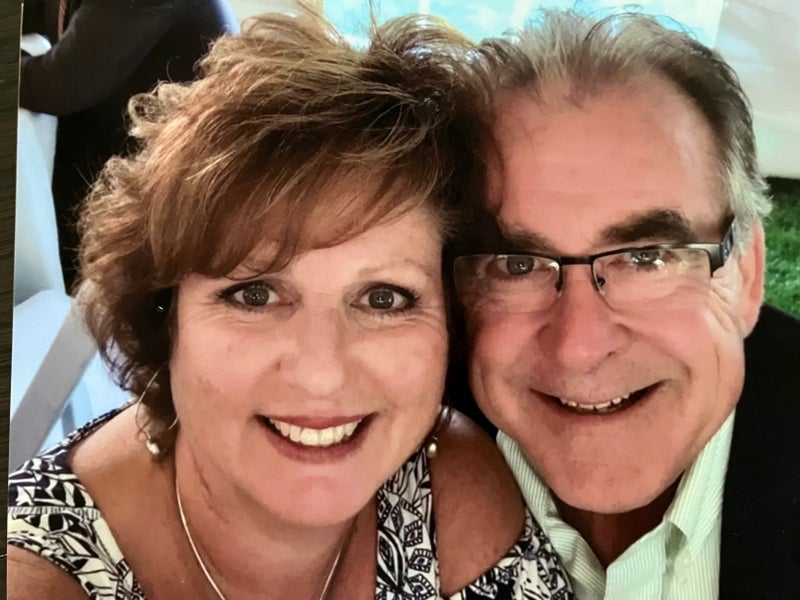
Spring Lake resident Stephen Kamp, 68, is thankful he married Cynthia, a “well respected registered nurse who worked at Trinity Health Muskegon for 38 years,” he said. “It’s a real advantage being married to an RN.”
Thanks to Cynthia, Stephen has gone for checkups twice a year since he was 30 years old.
“I’m in tune with all of my numbers: heart rate, blood pressure, cholesterol, low-density lipoproteins (LDL), high-density lipoproteins (HDL), and triglycerides. I’ve kept a close eye on my health all these years,” he said.
Stephen has a family history of cardiac disease and stroke, so he has benefited from knowing these numbers. In fact, in 2012, his attention to how his hands were cold and tingling led him to request a stress test to rule out any cardiovascular cause.
All his numbers were normal at that point, but his cardiologist felt the test revealed something. Sure enough, Stephen had blockages in his heart and was saved by a quadruple bypass performed at Trinity Health Muskegon.
Fast forward to March 2026
It was a regular day in March, and Stephen was out running errands, including getting the car washed.
He was wiping the water spots off the car when he got dizzy and wondered what was happening.
“I looked at the people who were vacuuming their cars and their feet were on the left and their heads were on the right, and they were walking vertically. Then I began to get nauseated. I shut my eyes and looked for my phone in the car, and I dialed 9-1-1. I said, ‘Here’s the deal: I’m in my car and I’m having a stroke.’”
Within four minutes the paramedics arrived. But by that time, Stephen was disoriented, unable to get out of his car, and throwing up. “The first responders helped me out of my car,” he said.
Time is Brain
With each moment that a stroke goes untreated, the nervous tissue in the brain is rapidly and irreversibly damaged. The faster a person gets to the emergency room, the more opportunities for physicians to try to stop the stroke and save the brain from long-term damage.
The ambulance drove Stephen to the Emergency Department at Trinity Health Muskegon, where staff immediately performed a CT scan.
Trinity Health Muskegon is certified as a Primary Stroke Center and has a 24/7 stroke team consisting of nurses, ER doctors, stroke neurologists, radiologists, and other support staff who are ready to immediately respond and rapidly assess any patient that walks through their door with a stroke.
It was there that Stephen met Kasim Qureshi, MD, vascular neurologist with Trinity Health Medical Group, Neurology.
“Trinity Health’s comprehensive stroke program is nationally recognized for excellence in stroke care, and our stroke center certifications represent our commitment to our patients,” said Dr. Qureshi. “We have gone the extra mile to have the necessary structure, staff, and procedures to ensure patients are getting care at a place known for its skill in treating strokes.”
The Power of TNK
After quickly identifying the issues, it was clear Stephen was having an ischemic stroke. Dr. Qureshi treated Stephen with TNK (Tenectaplase), a medication used to dissolve blood clots that cause strokes.
“Stephen had a blocked artery in his brain and was administered TNK to save him from having a devastating stroke. He walked out of the hospital without any symptoms 24 hours later,” said Dr. Qureshi.
“Dr. Qureshi is a very nice man,” said Stephen. “He is probably the friendliest and most attentive doctor I’ve met. He answered every question my wife and I had. He is very thorough.”
Top-Notch Care
“Stephen suffered a unique type of stroke in the back part of his brain that caused him to have severe dizziness and nausea,” said Dr. Qureshi. “It is important to know there are also some more unusual symptoms of stroke, such as dizziness, numbness, and confusion. People with sudden onset of dizziness should go to emergency immediately,” said Dr. Qureshi.
Stephen was amazed by the rapid response at Trinity Health Muskegon.
“Within two hours I was pretty much back to normal. People around me were walking normally,” he said with a chuckle. “Every half hour I had to have a neurological exam. It was quite an experience.”
Medical staff monitored Stephen in the Intensive Care Unit overnight.
Going Home
Before he went home the next day, Stephen met with a physical therapist and speech therapist, and they found no deficiencies. Amazingly, his only remaining side effect is occasional vertigo.
“Major kudos go to Stephen,” said Dr. Qureshi. “He was the ideal stroke patient. He was educated about stroke warnings, he recognized his symptoms, he called 9-1-1, and he came to the hospital shortly after he knew what was happening. Because of that, we were able to give him clot-busting medication. He couldn’t walk when he came in and walked out of the hospital the next day.”
Grateful for the care he received, Stephen says, “Trinity Health was spot on with my care.”
Great Advice
Stephen also has advice for others:
- Stay in tune with your body and how you normally feel.
- Know your numbers.
- If you experience changes, take the hint: Something is going on.
- If you are feeling “off” or experiencing something different, contact your doctor and be honest.
- Listen to your doctor
Dr. Qureshi agrees:
“Many strokes are caused by underlying medical problems, like diabetes, high blood pressure, high cholesterol, and smoking. If you have any of those conditions and they are well controlled, you could significantly reduce your risk of heart attack and stroke.”

Check Your Stroke Risk
Start with a Stroke Health Risk Assessment to better understand your personal risk factors and decide next steps for your health.
Take AssessmentConcerned About Stroke Risk?
We recommend reaching out to your primary care provider (PCP). Don’t have a PCP? We offer convenient primary care locations across Michigan. Whether you’re an existing patient or new to our system, you can browse providers and schedule your next appointment.
If you think you or someone else may be having a stroke, don’t wait — call 911 immediately.