



Beets Help Beat High Blood Pressure, Improve Blood Vessel Health
February 26, 2026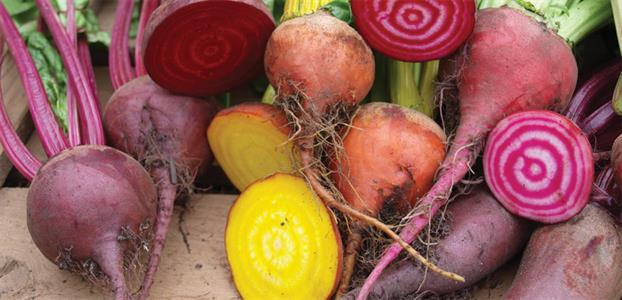
Fun Facts
Beets are an incredible vegetable! Both the roots and greens can be eaten and both are unbeatably nutritious. Beets come in all shapes and sizes. Did you know that the traditional red beet is not the only variety available? Heirloom varieties can be golden yellow, white, pink and white ringed and even oblong shaped! They belong to the family Amaranthaceae and are related to leafy vegetables such as Swiss chard, amaranth, spinach and quinoa.
The wild ancestral origin of beets is believed to be sea beets, which have been around for thousands of years. Some of the earliest records of sugar beet domestication trace back to the ancient Egyptian and Roman Empires. Ancient Assyrian texts even describe beet cultivation in the Hanging Gardens of Babylon. And here’s something fun: once harvested, the entire beet plant can be consumed—including the stems and leaves! [1]
Beets aren’t just historically fascinating—they also play an important role in heart health. Their natural dietary nitrates support healthy blood pressure, which makes them especially meaningful in the context of Trinity Health Michigan Medical Group’s ongoing work to improve hypertension outcomes.
Nutrition Information
These colorful root vegetables contain phytonutrients called betalains that give beets their rich red or yellow color. Betalains have been shown to provide antioxidant, anti inflammatory, and detoxification benefits. Beets are also a natural source of dietary nitrate, which increases nitric oxide production and supports lower blood pressure and healthier blood vessels—another reason they’re an excellent addition to a heart healthy diet.
One cup of raw beets provides about 35% of your recommended daily value of folate and is also a good source of manganese, fiber, potassium, and vitamin C. [1]

Lauren Hodge, MD
"A healthy diet and regular physical activity can help control high blood pressure. When lifestyle modifications are not enough, there are medications we can use to help lower blood pressure and risk of heart disease."
Lauren Hodge, MD | Family Medicine, Trinity Health Medical Group, Primary Care &Pediatrics - North Muskegon
Trinity Health Michigan
Growing Season /Storage Tips
- In Michigan, fresh beets are generally available from June to November but they can be grown, harvested and/or stored well into the winter.
- Choose small to medium sized beets with fresh, unwilted greens.
- Avoid beets with bruises, soft spots, or other signs of spoilage.
- Do not wash beets before storing—place them in a plastic bag, remove excess air, and store them in the refrigerator for up to 3 weeks.
- Cooked beets can be frozen.
Request Beets in Your Next Meal
Beets are as versatile as they are nutritious. They come in a variety of colors and can be prepared in countless ways—roasted, steamed, pickled, juiced, boiled, or sliced raw on salads or with dips. And don’t toss the greens! They’re delicious braised or mixed fresh into a salad.
Recipe: Roasted and Pickled Beet Recipes for Every Season
References
[1] The Farm at Trinity Health – https://www.trinityhealthmichigan.org/recipes/easy-healthy-beet-recipes
[2] Cultivate Michigan – https://www.cultivatemichigan.org/featured-foods/foods/beets