



The Estrogen Patch: a game changer for perimenopause
October 19, 2026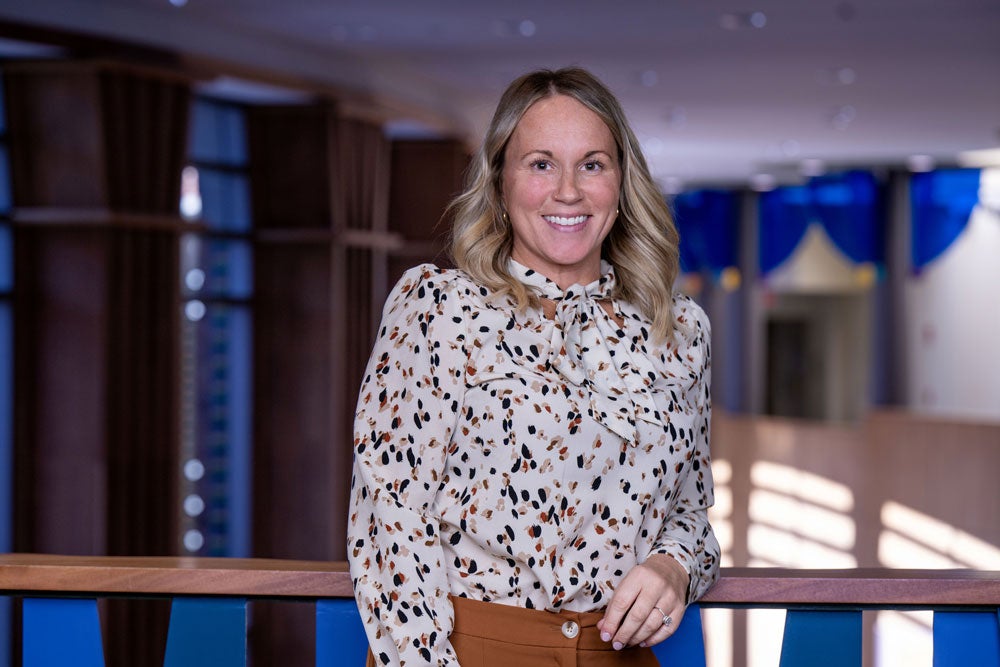
Shannon Silva, 41, began to feel different around the age of 37. Unbeknownst to her, she had begun to experience a variety of perimenopause symptoms: mood swings (especially irritability), occasional sleep disturbance due to night sweats, headaches, brain fog (issues with memory and concentration), and “a different kind of fatigue.”
After speaking with other women and later consulting Katie Bernardoni, MD with Trinity Health IHA Medical Group, Obstetrics and Gynecology, Shannon began to realize that she didn’t have to live with all of those symptoms.
“Dr. Bernardoni opened a whole different world for me,” Shannon explained. “She is genuine and comforting, and she listens, listens, listens. Dr. Bernardoni is phenomenal.”

The Estrogen Patch
Dr. Bernardoni’s recommended treatment for Shannon was the estrogen patch, which can be a good option for women without a uterus.
“The estrogen patch is a form of hormone replacement therapy that is absorbed through the skin (trans dermally) rather than taken orally,” Dr. Bernardoni said. “There are alternative forms of transdermal estrogen, including gels, sprays, and lotions.
“For women who do not have a uterus, estrogen can be used alone as opposed to women who still have a uterus, who need progesterone in combination with their estrogen therapy,” she added. “Transdermal estrogen is most often referred over oral estrogen because it avoids first-pass metabolism in the liver. This means it is associated with a lower risk of complications.”
Shannon tried a couple of different types of patches and landed on a twice weekly patch at a dose she had to work up to. She feels that the last six months on this regimen have been a “game changer.”
““The patch I am on now has worked extremely well,” Shannon said. “The biggest change I noticed is my mood. I used to feel immensely irritable. Now I have some of my calm back and I am more patient. My sleep is also better — no hot flashes — and I stay asleep. And the patch has increased my sex drive. Overall, I have far less anxiety, less brain fog, and I feel well.”
Shannon’s Advice
Shannon advises women to track their symptoms and be proactive when it comes to getting help.
“I didn’t realize how crummy I felt until I didn’t feel crummy all the time,” she shared. “Advocate for yourself. Don’t settle. Bring up your symptoms to your PCP or OB-GYN. This doesn’t have to be your ‘new normal.’ You don’t have to feel this way. You can be treated.”
You don’t have to navigate menopause alone.
Whether you're experiencing early signs of perimenopause or navigating menopause symptoms, expert care can help you feel your best.