



Trinity Health Michigan Medical Groups Doctor Performs 1,0000th Implant Procedure to Reduce AFib-related Stroke Risk
October 22, 2026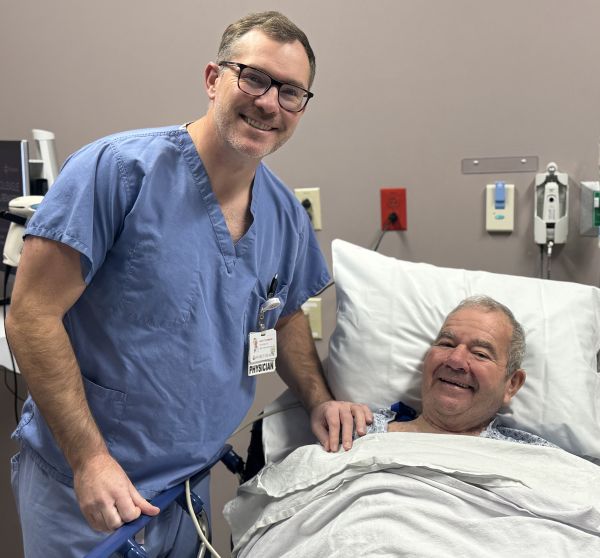
MUSKEGON, Mich. (October 22, 2026) – Trinity Health Muskegon is celebrating an exciting milestone this week that reaffirms Muskegon as the go-to destination in Michigan for reducing atrial fibrillation (AFib) stroke risk. On Wednesday, October 21, Noah Thormeier, DO, Interventional Cardiologist, Trinity Health Medical Group, Cardiology – Muskegon performed his 1,000th procedure implanting a small device that helps prevent stroke in certain patients with AFib not caused by a heart valve problem.
Dr. Thormeier has performed this procedure more than any physician in Michigan and is among the leaders across the U.S. This is important, as national analysis published in the American Heart Association/American Stroke Association Journals show that greater hospital and physician volumes with this procedure have been linked to higher procedural success.
“Reaching this milestone is a testament to the heart and vascular team here in Muskegon and our commitment to providing the right solution for our patients,” Dr. Thormeier said. “It’s a straightforward, simple procedure that gives patients who need it a huge benefit. We have seen repeatedly how this procedure improves their lives.”
AFib is the most common type of irregular heart rhythm, affecting more than 10 million Americans. It causes the heart’s upper chambers to beat out of sync with the lower chambers and has been linked to a fivefold increase in the risk of stroke. When AFib disrupts the normal pumping action of the heart, blood can collect in a pouch on the side of the heart called the left atrial appendage.
The device is implanted via catheter and closes off the appendage. This is a one-time procedure that, while not treating AFib itself, reduces stroke risk and eliminates the need for a lifelong reliance on blood thinners. Most often the procedure can be completed in 15 to 30 minutes, with patients usually going home about four hours later. They resume their daily activities with limits on heavy lifting.
“I feel incredibly grateful for the path I chose and the opportunity to do this work every day,” Dr. Thormeier said. “Being able to make a meaningful difference in patients’ lives is very rewarding. When you see them months or even years later and witness the positive impact the procedure has had, it reinforces why you entered medicine in the first place. Knowing you’ve helped someone is the greatest reward.”
Dr. Thormeier, also a member of the Cardiovascular Network of West Michigan, performs the procedure at Trinity Health Muskegon and treats patients from a large part of West Michigan and the Lakeshore communities. Every patient that undergoes the procedure must first be referred by another physician, and then they will be evaluated by Dr. Thormeier and his team. This includes confirming the patient has AFib not caused by a valve problem, and that there are reasons to avoid blood thinners. Trinity Health Ann Arbor and Trinity Health Oakland also offer this procedure.
If AFib is disrupting your rhythm, request an appointment with an AFib specialist and learn about advanced treatments like this at TrinityHealthMI.org/AFib.