



Trinity Health Ann Arbor Performs Michigan’s First Implant of World’s Smallest Device for Heart Rhythm Treatment
January 7, 2026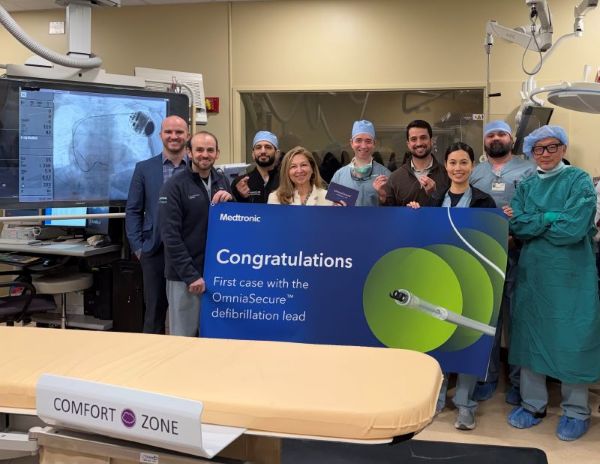
FOR IMMEDIATE RELEASE
Media Contact:
Von Lozon
Pager: (248) 725-2400
von.lozon@trinity-health.org
ANN ARBOR, Mich. (Jan. 7, 2026) – Trinity Health Ann Arbor has completed Michigan’s first implant of the world’s smallest device designed to help treat dangerous heart rhythm disorders. The defibrillation lead is a thin wire that connects an implantable cardioverter defibrillator (ICD) to the heart. This connection allows the ICD to monitor heart rhythms and deliver gentle pacing or a life-saving shock if a patient’s heart beats dangerously fast or stops suddenly.
At just under 1.6 millimeters wide, the FDA-approved OmniaSecure™ defibrillation lead from Medtronic is guided through a vein and placed in the heart’s right ventricle using a minimally invasive catheter-based procedure. The lead is used to treat conditions such as ventricular tachycardia, ventricular fibrillation, and sudden cardiac arrest, and it can also provide pacing support if a patient’s heart beats too slowly.
“This advancement underscores our commitment to delivering world-class cardiovascular care to the communities we serve, ensuring patients have access to the latest innovative treatments that promote their health and well-being,” said Alonzo Lewis, president of Trinity Health Ann Arbor, Livingston, Livonia and Oakland. “Our heart care team is second to none and continues to set the bar for excellence, achieving outstanding outcomes and improving the quality of life for patients throughout the region.”
Trinity Health Ann Arbor has been a nationally recognized leader in comprehensive cardiovascular care for more than 50 years. Led by a dedicated team of cardiologists covering all subspecialties of cardiovascular medicine, the hospital continues to set the standard for excellence, delivering outstanding outcomes and introducing innovative solutions to improve the lives of patients living with heart-related health conditions.
“This advancement elevates the quality of care we provide due to the device’s small size (~65% smaller than existing defibrillation leads) and the catheter-based delivery method we employ, which taken together reduce complications, improve placement accuracy, and support the long-term reliability of the cardioverter defibrillator system, all critical factors for patients at risk of sudden cardiac arrest or other serious rhythm disorders,” said Mohammad-Ali Jazayeri, M.D., an electrophysiologist and medical director of the Cardiac Device Clinic at Trinity Health Ann Arbor. “Our team is committed to introducing innovations like this that enhance safety, improve outcomes, and make a meaningful difference in the lives of our patients.”